

Ask the Experts
Drinking wine and reading books

I received review copies of two new wine books recently and both have proven useful in my daily life.
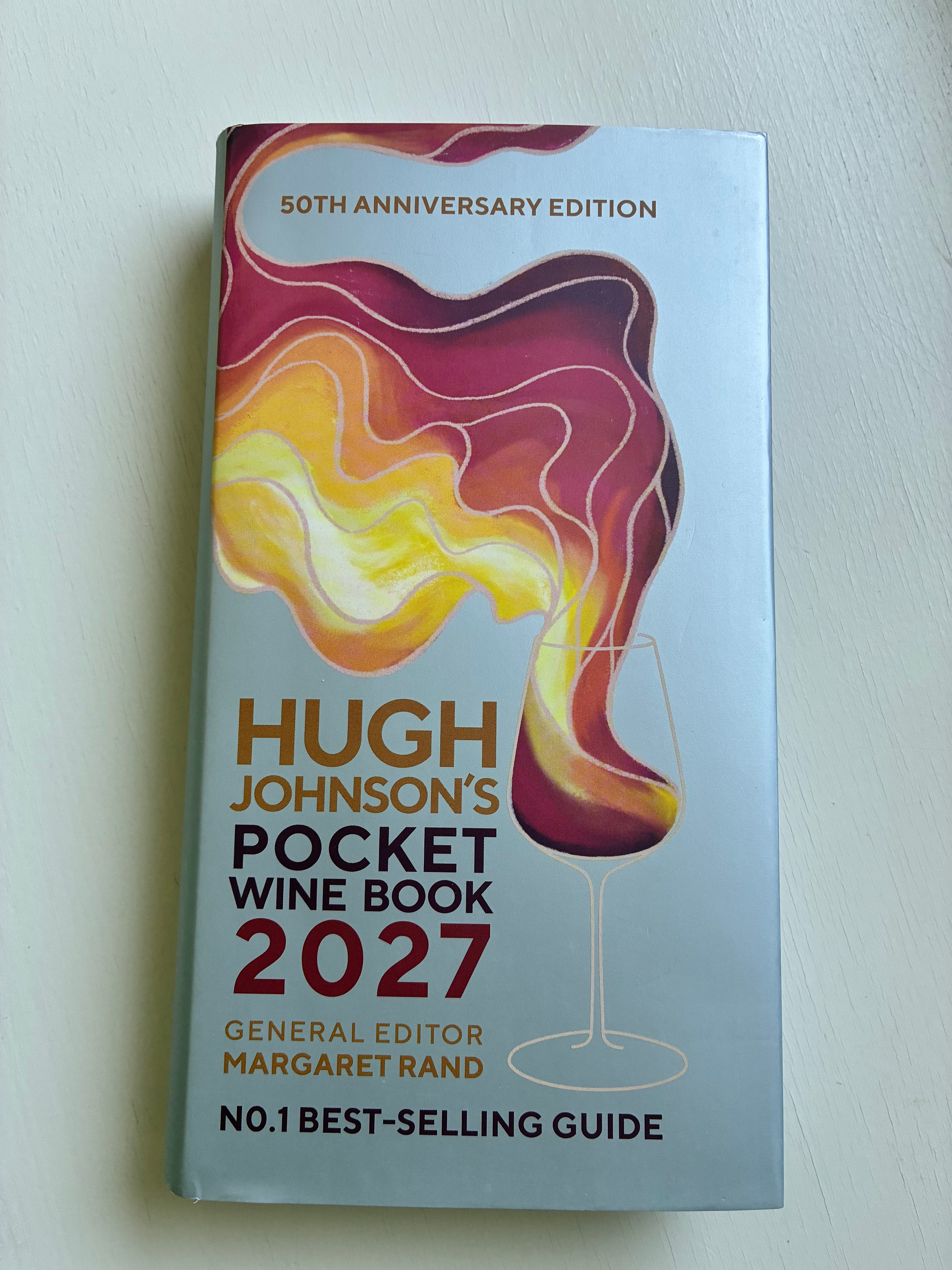
The first book was the 50th anniversary edition of Hugh Johnson’s Pocket Wine Book 2027 with General Editor Margaret Rand. I have been a huge fan of Hugh and his guides, both reliable sources of information, long before there was an Internet.
Hugh published his first pocket guide in 1977 while also publishing full-size guides about gardening and wine. When I interviewed Hugh (I called him “Hugh” and not “Mr. Johnson” because I’d known him for years) in my Wall Street Journal column on the 45th anniversary of his pocket guide, Hugh told me that the “pocket” size was his publisher’s idea. The publisher, Mitchell-Beazley, challenged him to cram all the important stuff he knew about wine into a pocket-size guide. “And 12 months later he came back and wanted another,” Hugh said, referring to the next edition. “I trapped myself into an every-12-months task.”
The 2027 guide is the same diminutive size but as mighty as its 49 pocket predecessors and is likewise printed in the same tiny typeface and crammed with up-to-date information about wines, wineries and cheese with lots of fun asides in (small) red type. Sample: “The Pago de los Balancines winery in Spain is a must-visit for lovers; they breed ‘huge mastiffs.’”
There is even a vintage guide to wine regions which proved useful in a debate that I had with a friend about the 2022 versus 2023 vintage in Chablis. I employed Hugh’s guide to prove my point: On 2023 “Summer oscillated between heat/rain. Challenging; results generally gd.” And 2022? “Well-balanced wines in gd volumes, despite heat and drought.” (Yes, I was and am pro 2022 wines.)
The only thing missing from this petite, but profound book is Hugh himself. The forward, “Agenda 2027,” is written by the very capable Margaret Rand.
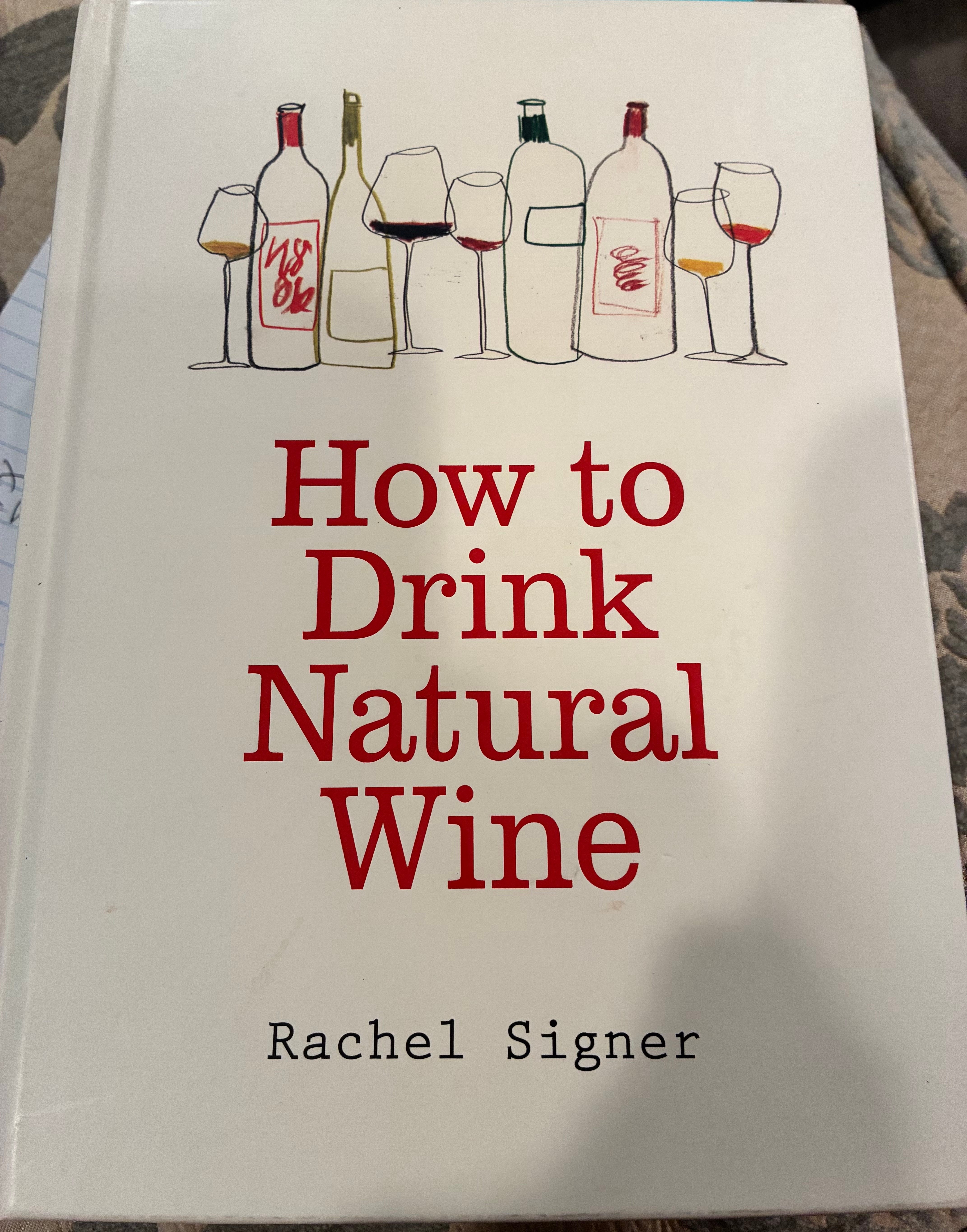
The second book How to Drink Natural Wine by Rachel Signer was one that I turned to when I tasted a bottle of natural wine - the 2022 Domaine Glinavos “Paleokerisio” - a semi-sparkling Greek orange wine that I’d purchased before and liked- but that greatly disappointed the second time around.
The previous bottle had been a spritzy, off dry spicy delicious drink while the second smelled like a barn and tasted like wet hay. What had happened between the first and second bottles? Perhaps How to Drink Natural Wine could explain it to me?
I thumbed through the pages of the nicely designed book (also petite though not pocket-size) until I came to the chapter “Natural Wine & Potential Flaws.” That seemed like a good place to start though the opening line read like a warning: “There’s a reason that enologists started adding commercial yeasts, sulfites, and so on to wine in the first place: stability. These products ensure that a wine will turn out untransmutable and consistent, no matter what the vintage provides.” That sounded like a good argument for sulfites to me.
And yet, Ms. Signer said, “What’s enticing about natural wines, however, is that they reflect the peculiarities of a certain year, telling a unique story about a place and time, without any kind of veil to hide behind.” Though she noted the various flaws a drinker might encounter in a natural wine (oxidation, mousiness, volatile acidity and reduction), Ms. Signer also noted that natural wine drinkers might be somewhat tolerant when it came to wine flaws: “In conventional wine culture, a flaw makes a wine totally undrinkable and unsellable. Within natural wine, we can be a little more forgiving.” She even suggested it was all part of the fun. “The gamble is part of the pleasure.”
So perhaps the weird wet hay wine wasn’t the problem. It was my non-gambling non-flaw-forgiving self. As Taylor Swift sang “It’s me. Hi, I’m the problem. It’s me.”
This week’s (non-natural but certified organic) recommended wine:
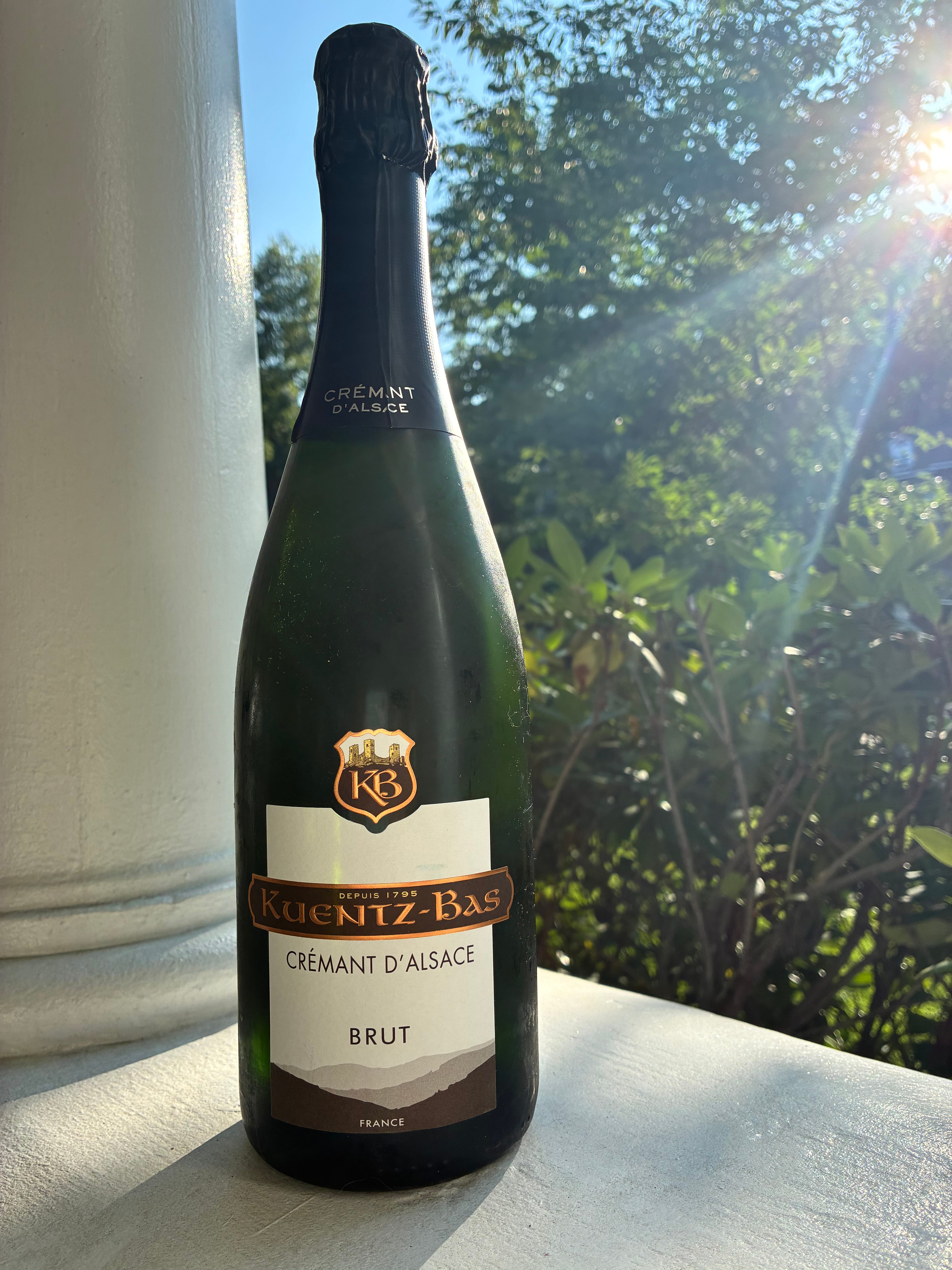
Kuentz-Bas Crémant d’Alsace ($20)
I am a big fan of the wines of Alsace, including their traditional-method (aka Champagne-method) sparkling wines labeled “Crémant.” (Wine made by this method outside of Champagne may be labeled “Crémant” with the region of origin attached.) This delightful blend of Pinot Auxerrois and Pinot Blanc is a rich slightly creamy slightly toasty sparkling wine from a terrific Alsace producer that left me and my friends wanting more.
Perhaps titling your book, "How to Drink Natural Wine", would tell prospective readers who are 'experienced' drinkers all they need to know before they bother to buy the book! I've literally had it with natural wines. I'm sick of the fizz. I'm sick of the brett. I'm sick of the reductive VA aromas of nail polish that stab into my sinus cavity. I'm sick of the mousiness that natural Somm's pass of as 'Earthiness' and 'Natural Terroir'. I'm sick of the cloudiness that's worn like a badge of unfiltered honor. I'm sick of the Lactic Spoilage with its lovely aromas of spoiled yogurt, sauerkraut & pickle juice. I'm sick of wine that smells like a three day-old Kombucha. I'm sick of the high prices they command for no reason other than Gen Z has fallen hook, line and sinker for the marketing myth that natural is more authentic, better for the environment and less stuffy than the wine their Grandfathers socked away under the stairs. I'm sick of the label art that is either a badly drawn cartoon or an equally bad art piece done by the winemakers partner. And most of all, I'm sick of having to explain any of this to numbskulls who will happily pay twice as much for a bottle that smells like cider left in a gym bag, then call it "expressive terroir", while claiming they have impeccable taste, while insisting the vinegar notes are intentional and the mouse taint is simply part of the journey.....
As a wine maker I have my own opinion about natural wine, the main one being that there is no legal designation for the word "natural," and I am quite certain that many commercial vintages using that designation may have had some intervention. Is racking off the lees "natural?"
In 1983 I visited the cellar of Cos d'Estornel, a highly regarded Bordeaux producer. Before I went, I read that they never filtered their wines. When I entered the cellar, I saw wine being pumped through a plate and frame filter. I said to the winemaker, "I thought you didn't filter your wines."
He replied, "We don't." Then I pointed at the filter and asked, "What is that?" He said, "c'est un filtre" but, he added, it's just part of the bottling line.