Risky Business
What's your risk tolerance when it comes to buying unknown wine?

I’ve been talking with a top financial professional in recent weeks about my tolerance for risk. My investment strategy to date ranks just above hiding my money under a mattress so we have had much to discuss.
My risk tolerance when it comes to investing in unknown wines is much greater- for better or worse. Indeed, one of the greatest joys of wine is an abundance of choice- though that can prove its greatest challenge as well. Endless options represent endless opportunities to find a new favorite- or to make a terrible choice. I’ve experienced both in recent weeks.
To mitigate the possibility of disappointment, I follow a few rules which I’ve found help to increase the odds of success. The first is price. If it’s a wine that I truly know nothing about-not the producer, the grape or even the region I won’t risk spending more than $25.
A friend once told me, “Never lend more money than you’re willing to lose” and I’ve applied that same maxim to an unknown wine. Spending a modest amount of money makes it easier to pour a bad wine down the drain- though I’ve sadly disposed of three-figure wines that way as well. For example, I bought a number of wines from the cellar of a collector and found that nearly all of them were over the hill.
My second rule relates to winemakers and regions. I’m far more likely to take a chance on a wine from a producer whose style I know I like but whose range of wines I haven’t tried. Maybe I know a winemaker’s basic Bourgogne but how about his Aligote? (Actually, said Aligote is almost always going to be great.) I look to wine regions where the wines tend to suit my palate. I’m thinking the Loire Valley of France, Mendocino in California, Alto Adige and Piedmont, Italy – those are all regions where I will happily take a flyer on an unknown producer and most often be pleased.
Of course, there are some risks I won’t take- wines that I know from experience I’m almost never happy to drink. That includes any dry wine made from the Muscat grape (Zibibbo is at the top of my must-avoid list) as well as most Gewurztraminers - save for wines from top Alsace producers such as Domaine Zind Humbrecht and Domaine Weinbach. Above all and especially no Pinotage-I am everlastingly intolerant of that inherently disagreeable grape.
My final rule is one that I’ve broken fairly often: do not take recommendations of unknown wines from unknown retail salespeople. We don’t know one another - though I’ve regularly been seduced by a good sales pitch. (Shout out to Joe Salamone, wine buyer of Crush Wines and Spirits in New York; I have never been disappointed by a wine recommended by Joe. I think I need to dedicate a column to him.)
But I have trusted the taste of two different salespeople at two different wine stores recently and experienced varying degrees of regret upon opening their recommended bottles. The 2017 Huguet de Can Feixes Huguet Brut Nature Corpinnat ($37) was a well-made traditional (aka Champagne) method sparkling wine from Catalonia, Spain that sadly lacked the finesse and complexity the salesperson had promised it possessed. It wasn’t a dud, but it failed to elicit much excitement among my friends, and it was just a few dollars cheaper than the Champagne I preferred but the salesperson talked me out of buying.
The second wine, the 2024 Makarounas “Aerides” Xynisteri from Cyprus ($25,) came highly recommended from a charming salesperson and the word that came to mind to describe it upon first taste was “horrendous.” In truth that wasn’t my word but that of my friend Sheryl. Indeed, she and I were briefly at a loss for adjectives to describe just how awful this wine was: “Watery apple juice that has gone off” Sheryl offered. “A ‘F---ed’ up Viognier” we both agreed. It turned out that revulsion can be hard to put into words.
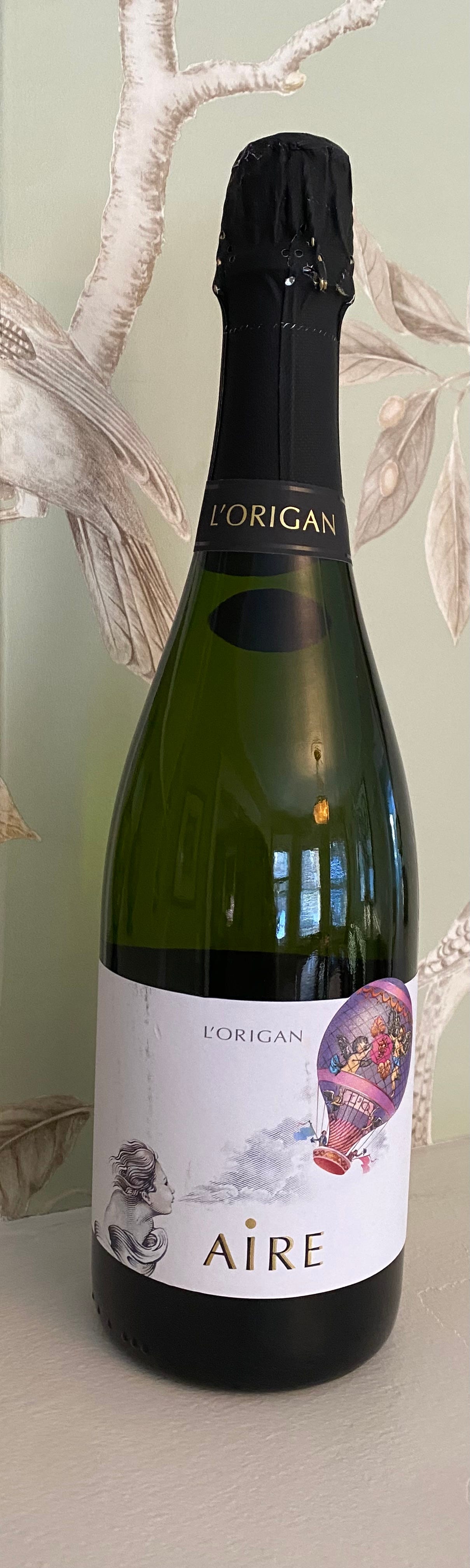
I risked one more unknown wine based on a shelf talker: the 2022 Aire de L’Origan Brut Cava ($20). It wasn’t a wine that I knew but the shelf talker described it as “a great example of the high quality you can get when you reach for a bottle of Cava” and the line noting its “tug of tension” sold me. The wine turned out to be good- not great- but very drinkable- marked by crisp notes of green apple and lemon, it was a fresh, very dry sparkler. Sheryl deemed it “very pleasant” which I took as a win.
Meanwhile, I really need to get back to my financial advisor, Michael Leopold, about the money-in-the-mattress situation. Michael has assured me that all of his clients who took his advice and created a “diversified asset mix” have experienced good results. In other words, he won’t be suggesting the investment equivalent of Pinotage.
Lately I’ve been taking a chance on Village Beaujolais and, of course, Cru Beaujolais as one of the unsung, delicious, and comparatively less expensive regions.
Speaking of under the mattress: Andre Tchelestcheff once showed me his wine collection — a couple of bottles under his bed.
«The second wine, the 2024 Makarounas “Aerides” Xynisteri from Cyprus ($25,) came highly recommended from a charming salesperson and the word that came to mind to describe it upon first taste was “horrendous.”» This made me cackle!