

What does that even mean?
A few pet peeves and a good cheap pink

“Taste Communication Costs Wine Industry Seven Million New Consumers” read the headline of a Wine Business story last week. The story noted the findings of a recent Wine Market Council report that revealed consumers were being driven away by the industry’s failure to communicate what a wine will taste like. I couldn’t help thinking part of the problem must be the words wine professionals use.
I find words like “focused” and “soulful” which some professionals use to describe wines are not only confusing but often downright absurd. Furthermore, I’d wager most wine lovers don’t understand their meaning when applied to a bottle of wine.
I decided to note five such words- including the aforementioned “focused” and “soulful” as some I find particularly irksome and/or confusing. Perhaps, dear readers, you’d care to share some terms you find irksome and/or confusing too?
“Focused”
What is a “focused” wine? Or better yet, what is a wine that lacks focus? The definition of the word “focus” (“operating with a clear, defined purpose”) doesn’t seem to make sense in a vinous context. And yet it shows up repeatedly in many wine writers’ notes. “Focused” seems better suited to describe the taster him or herself and not the wine they’re tasting. For my part, I think a wine’s chief “purpose” is to taste good. Is that what a “focused” wine does? Could “focus” be a synonym for deliciousness? I certainly hope so.
“Intentional”
This word is often employed in tandem with the word above. A wine that is “focused” is often “intentional” too. Every wine that a critic has the opportunity to taste has been produced, bottled and sold, therefore could it not be described as “intentional”? For my part, I’d prefer an “inadvertent” wine -one that its producer didn’t intend to make but that somehow got to the market – a bottle that they just put a cork in and said, “What the heck?!” The unpredictability seems like it could be lots more fun.
“Soulful”
This word appears often among critics not just of wine but also of music and art. It’s presumably an emotional response to something that touches the reviewer’s soul. Or perhaps said reviewer has somehow managed to identify the soul of the music, wine or art. I’m not sure where all this soulfulness resides. Is the wine/music/art the possessor of the soul or is it the one who is drinking it, aka you or me? I say Please keep your soulfulness to yourself.
“Driven”
I’m driven to distraction teetering on rage when this word is applied to a wine. It’s almost always employed in conjunction with another word such as “mineral” or “acid” or “fruit” – those seem to be three favorites – as in “a mineral-driven” wine or a “fruit-driven” wine. Why does it have to be “driven?” If by employing the word “driven” the taster means that the wine is dominated by one aspect or flavor why not say so?
“Curated”
My final peeve is a word which has been overused just about everywhere. Everything everywhere has been “curated” these days including and especially restaurant wine lists. No one simply selects, buys and (over)prices wines on a restaurant wine list; instead a sommelier or a wine director or some ambitious staffer bent on greater recognition is said to have “curated” the wine list. Do restaurant patrons prefer to choose a wine from a curated list rather than from a list whose creation (or creator) is unremarked upon- one that doesn’t include this precious word? I know that I do.
The Promised Pretty Good Definitely Cheap Pink
2025 Kirkland Côtes de Provence Rosé $9
The current Kirkland pink hit my local store a couple of weeks ago and I bought a couple of bottles as I was curious to taste the most recent Kirkland iteration. The verdict? It’s pretty good. A blend of Grenache, Syrah, Cinsault and Vermentino, the 2025 Kirkland Côtes de Provence Rosé is a juicy pink that’s slightly tropical, slightly floral, pretty dry and yes, cheap. It’s a wine to buy for a backyard picnic, a beach afternoon (though it does require a corkscrew) and while I could not detect whether or not it had a soul, I did determine it should be served (very) cold.
Coming Soon for Paid Subscribers: Three Good Pinks

The flyleaf of my father’s college dictionary which was my trusty aid in the writing of this column …
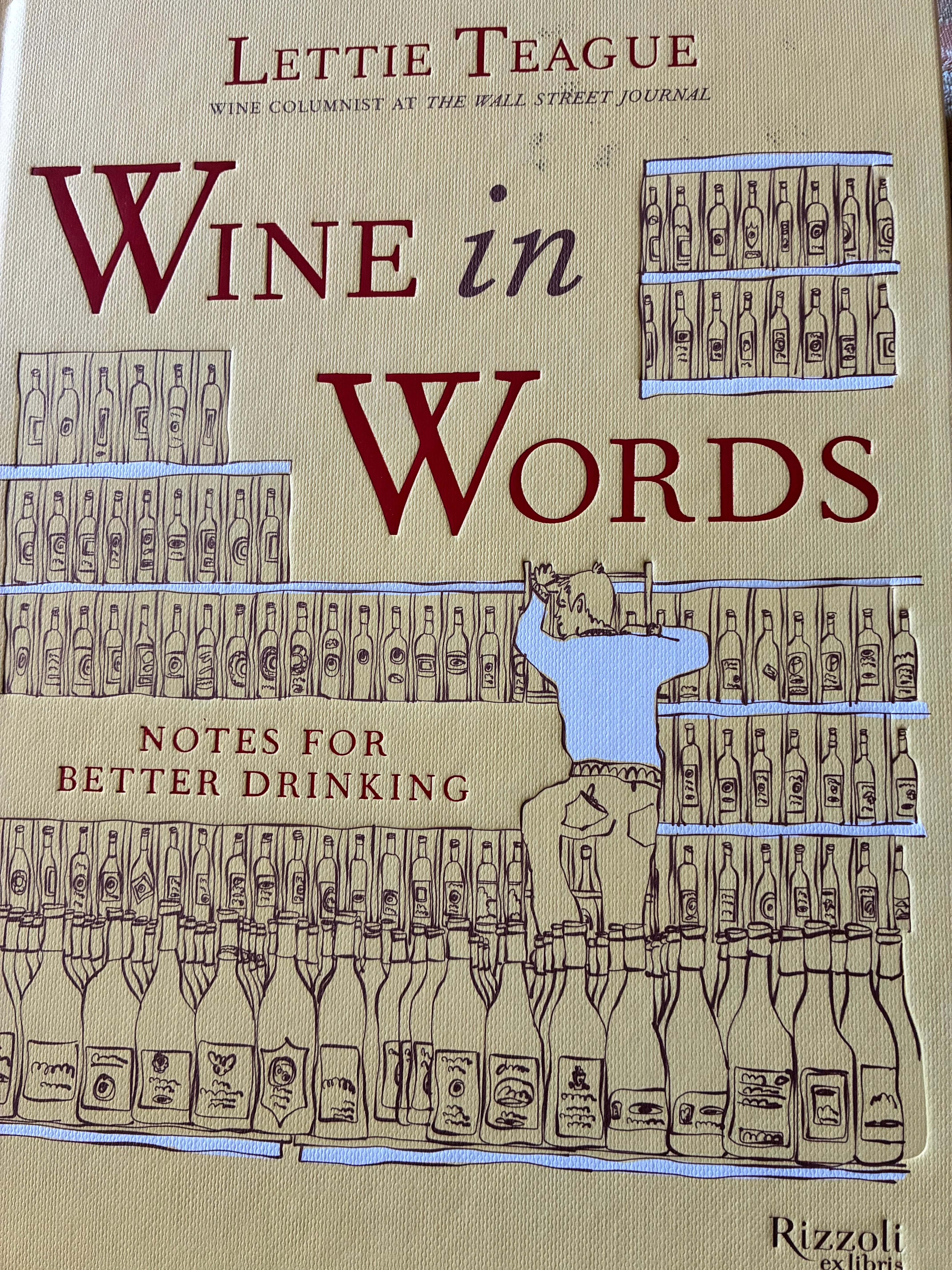
My favorite of all the wine books I wrote whose title says it all.
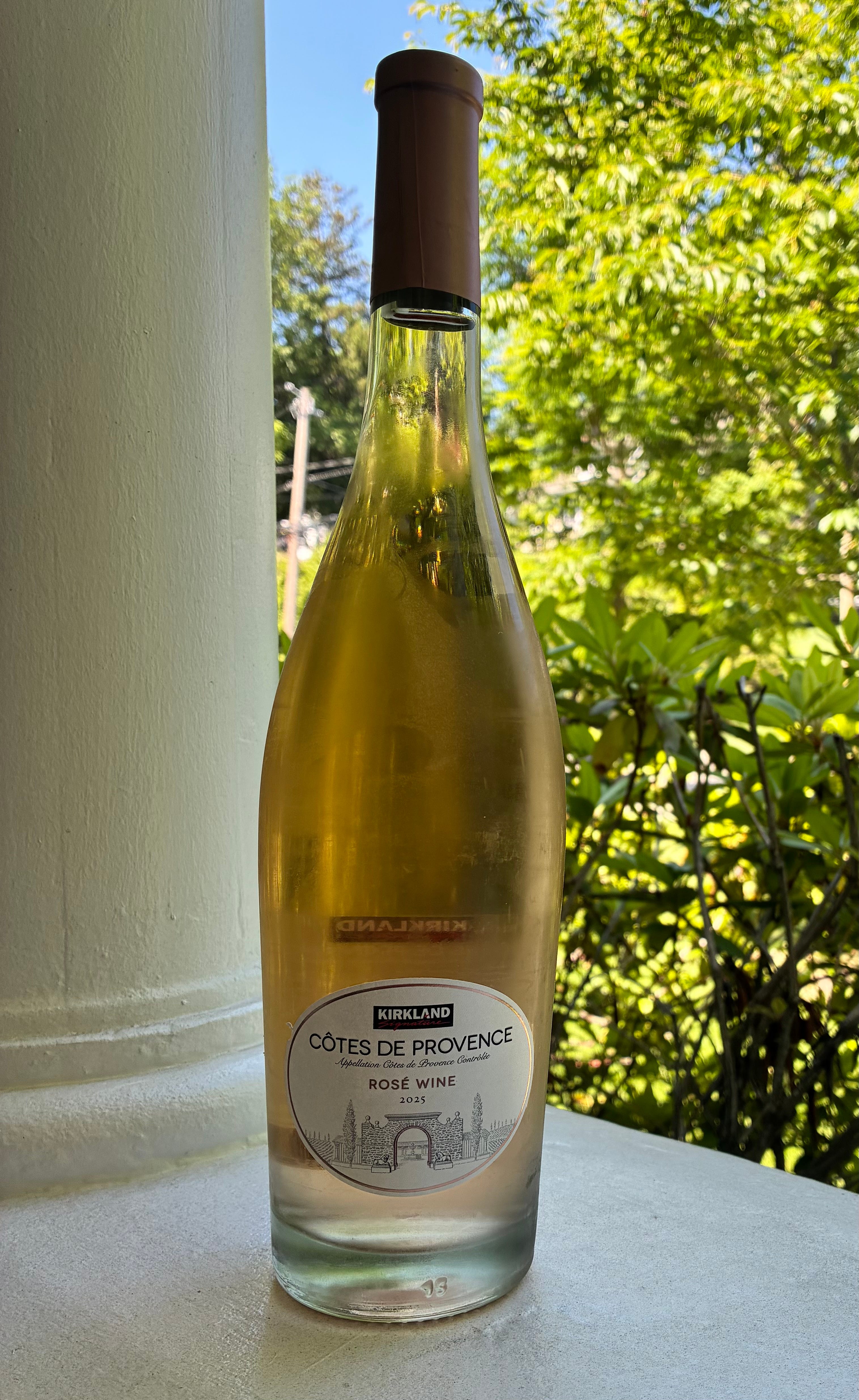
A wine that may not be soulful or driven but is most certainly intentional.
Lettie,
The flavors that most people understand are Chocolate and Vanilla. Chocolate is dark and rich and Vanilla is lighter and soft(ish). Start there. Personally, I prefer Neapolitan.
Thank you! I have noticed the same phenomenon on invitations describing (not!) the appropriate attire for a gala/fundraiser/celebratory party. What the devil, to cite just the most recent example in my experience, is “comedy chic?” (For a gala/fundraiser featuring a wonderful, up-and-coming comic). “Semi-formal” I understand. Even “dressy casual” is something I can work with. But I finally obtained all the corroboration I needed for my own conclusion that “comedy chic” has no discernible meaning when I saw the gamut—many of us in oxford shirts and khakis, some with and others without blazers, but also jeans and sneakers and—get this—shorts and a t-shirt. That said, the guy in shorts and t-shirt did display notes of soulful intention.