


I was in a wine shop last week to pick up a few bottles of 2024 Gini Soave Classico- my new favorite bargain white. Someone had placed bottles of 2023 Gini in front of the 2024 that I had to push aside to get the younger wine. It’s the sort of arrangement I commonly find in grocery stores where older goods are strategically placed in front of their fresher peers. Did the wine merchant believe shoppers wouldn’t see the older vintage in the same way a grocer figured customers won’t check the date of the milk?
I always opt for the newest versions of milk and wine (with a few vinous exceptions) and I’m quite vigilant about checking the labels of both. Of course, I realize this isn’t true for many shoppers- including my husband who has been known to bring home a chicken whose sell-by date is the same day as his purchase. Such a close date signals poultry that’s probably been shoved aside by people like me in search of a newer bird.
But there are times when an older vintage is the only available option and sometimes that even includes rosé – a wine whose newness is regularly touted by retailers in ways that non-rosé producers could only dream of having their wines ballyhooed.
There are signs in wine stores each spring announcing the arrival of this year’s pinks- though not yet. We are in rosé “shoulder season” where I live- and most of the 2025 wines have yet to arrive in shops. If I wanted to drink pink – as I did last week thanks to some summer-like weather- I’d have to buy a rosé that was fresh last year.
Of course some rosés famously improve with age. The rosés from the Bandol region of France can be quite long-lived, particularly the wines of Domaine Tempier whose Bandol Rose is the standard-bearer for well-aged pink. It’s a wine I’ve enjoyed for many years- both in its youth and middle-age but it wasn’t one of the wines for sale at my local retailer since it’s made in limited quantities and thus long since sold out.
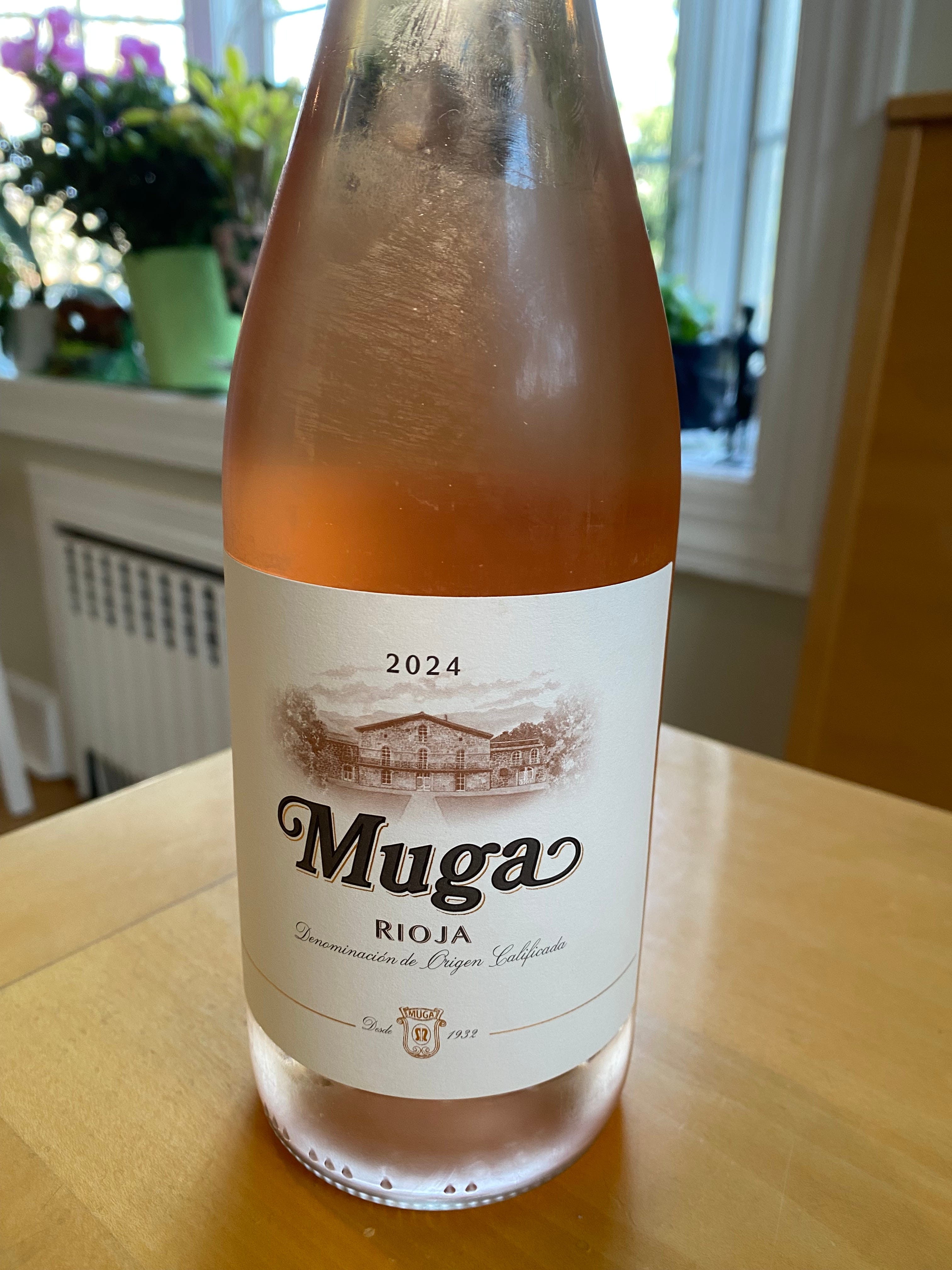
There was, however, a rosé on the store shelf that I’d purchased in multiples last summer and spring – a wine that I’ve consistently liked year in and year out- and best of all, there were several bottles of it (still) around: the 2024 Muga rosado, a pink from one of Rioja’s most-respected producers. A blend of red and white grapes, it has long been one of the most highly regarded Spanish pinks.
I brought the wine along when we dined with a friend who was as impressed with it as I was-all over again. It was just as fresh and lively and floral as I remembered it being in 2025 and at $15 a bottle it was also a good buy.
It’s chilly outside as I’m typing these words, but the forecast shows a warming trend. I’ll be heading to the wine shop again soon for more bottles of last year’s rosado.
Two signs of spring: a delicious pink and a joyful Pembroke Welsh Corgi.

.
Lettie,
Love the corgi, always!
As for the wine, there is a reason why that older rosé is just as good or better than the younger one. It takes time for the phenols (colored elements) to complex over time. As they bump into each other at the surface of the bottle, they form chains. When they do that, they lose their astringency and bitterness. This is the whole reason red wines need to age but the same can be true with pink wines.
The biggest risk to pink wines is that they are commonly bottled in clear "flint" glass. This lets light penetrate that can damage the quality of the fruit.
An older bottle that has been exposed to light should probably be avoided, but if it has been kept in the darkness, it may well be better than when it was new.
When wines are first released, they usually have a new dose of sulfites that are active. These sulfites eventually bind and the fruit can come forward.
So I don't buy newly released wines, and I look for older pink and white wines that have had some time to develop in the bottle if they have been protected from the light.
Lettie, now you’ve done it. You gave away the secret that real wine lovers have known for years.